 DEMO / FREE
TEMPERATE · THE THAMES
London
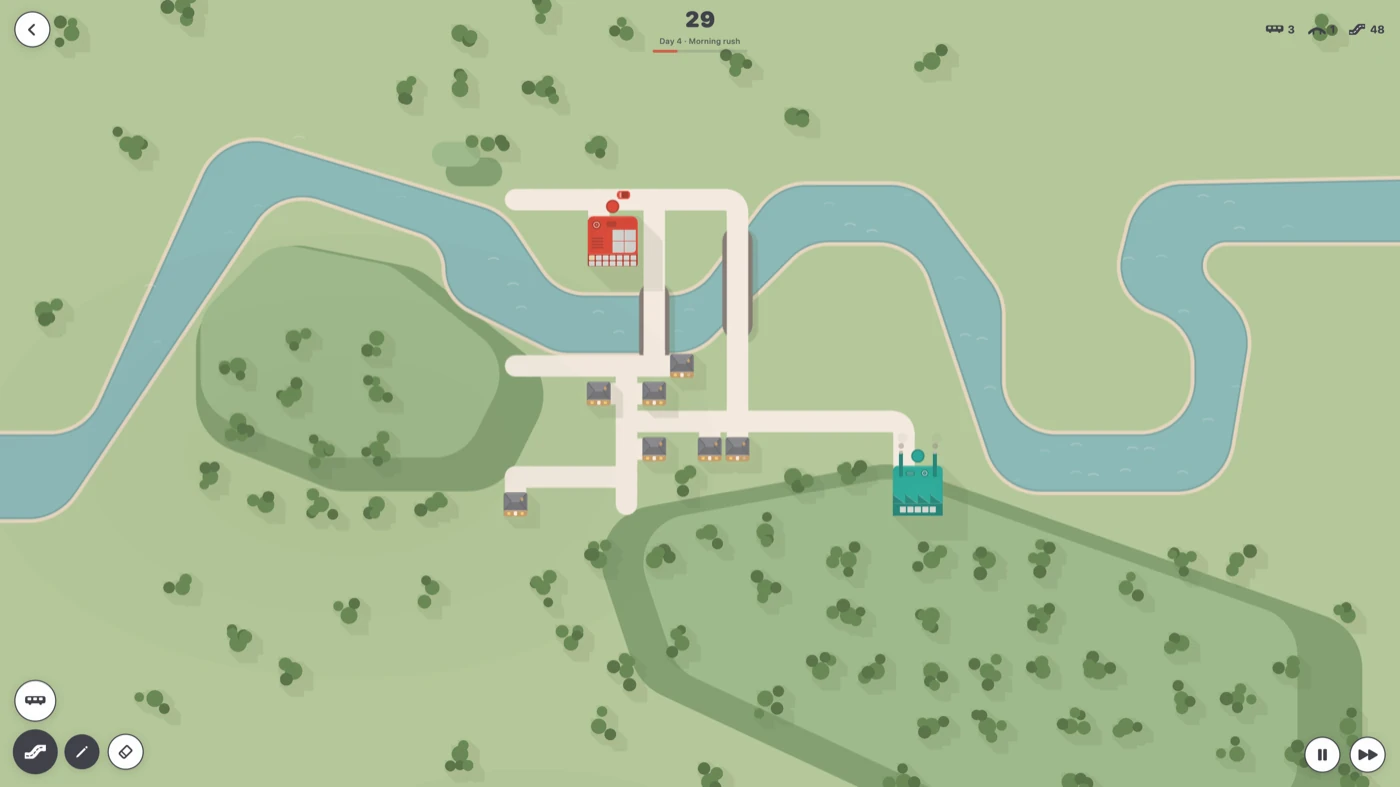
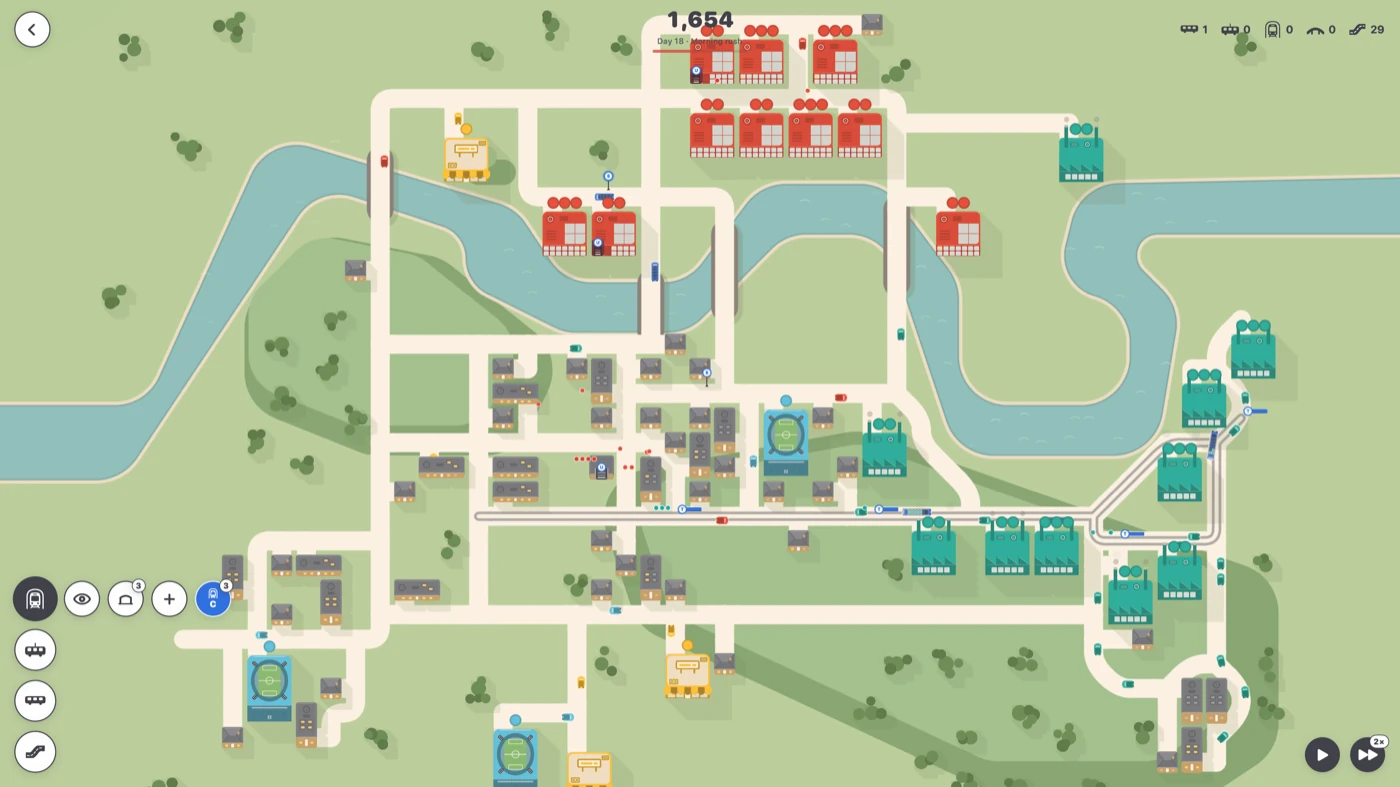
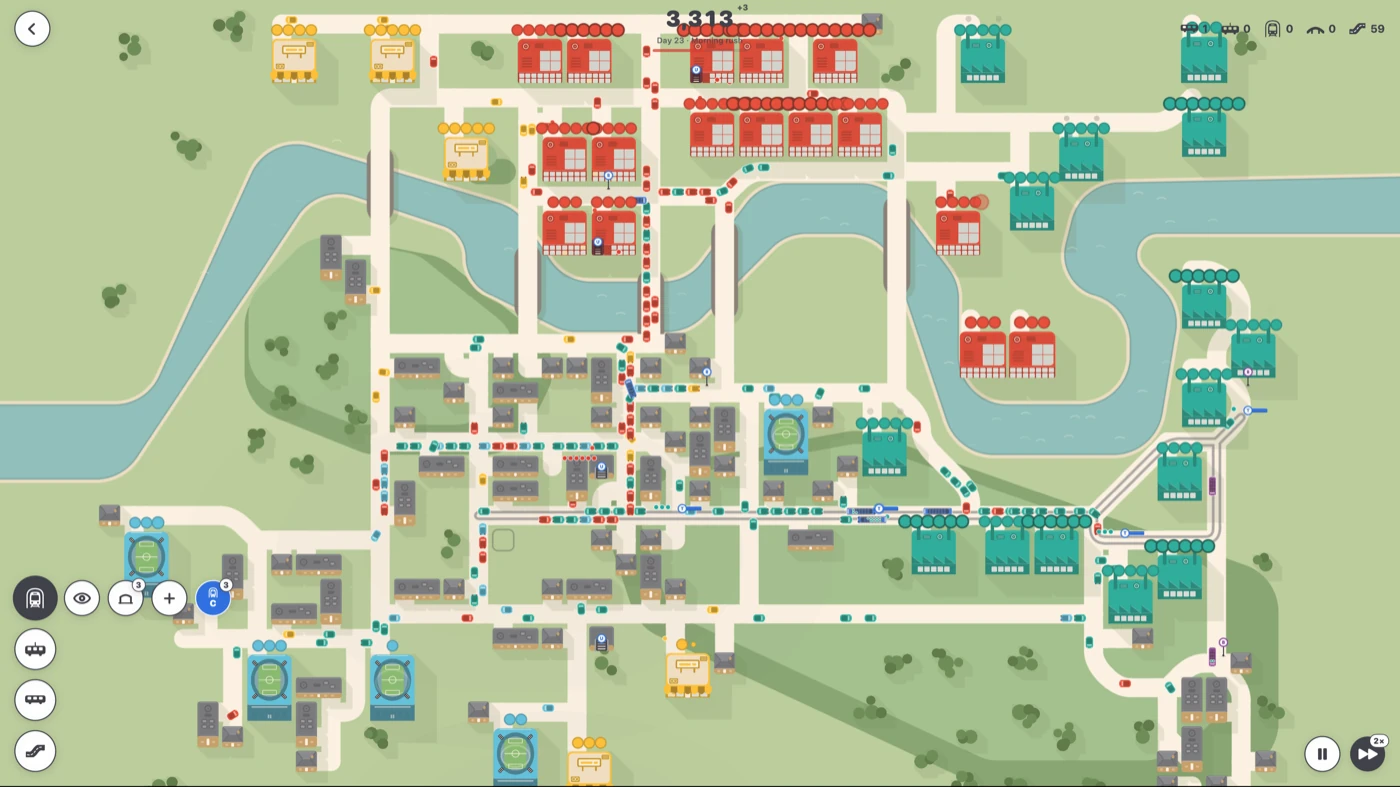
The Thames splits the map. Use bridges and the tube to get commuters from the suburbs in the south to work.
Bus
Tram
Tube
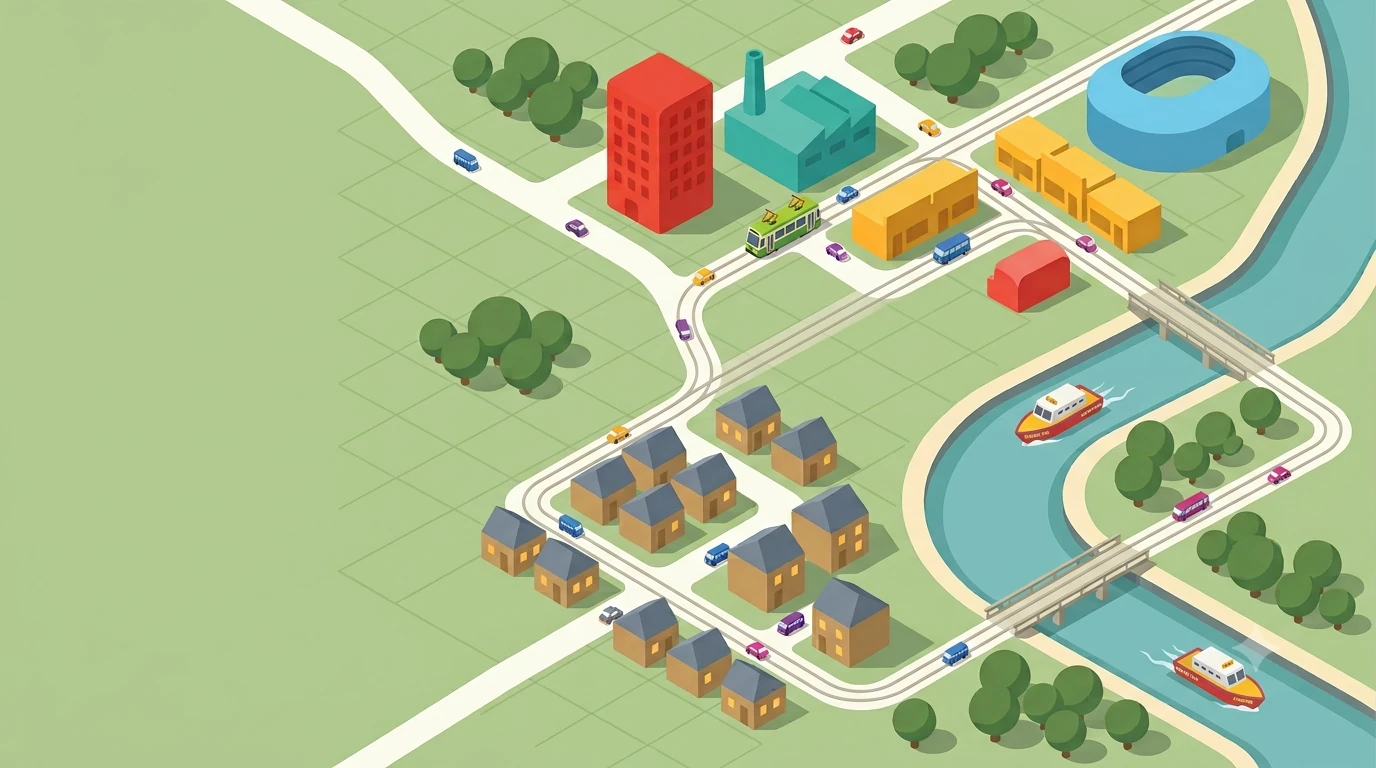
Roads start cities growing, but the junctions clog, and roads stop being the answer — so you draw bus lines, then tram track, then the underground. Miss enough of a rush and a destination overflows and the run ends.
Each mode carries more than the last and asks more of you in return. They arrive on a fixed schedule, whether or not you are ready.
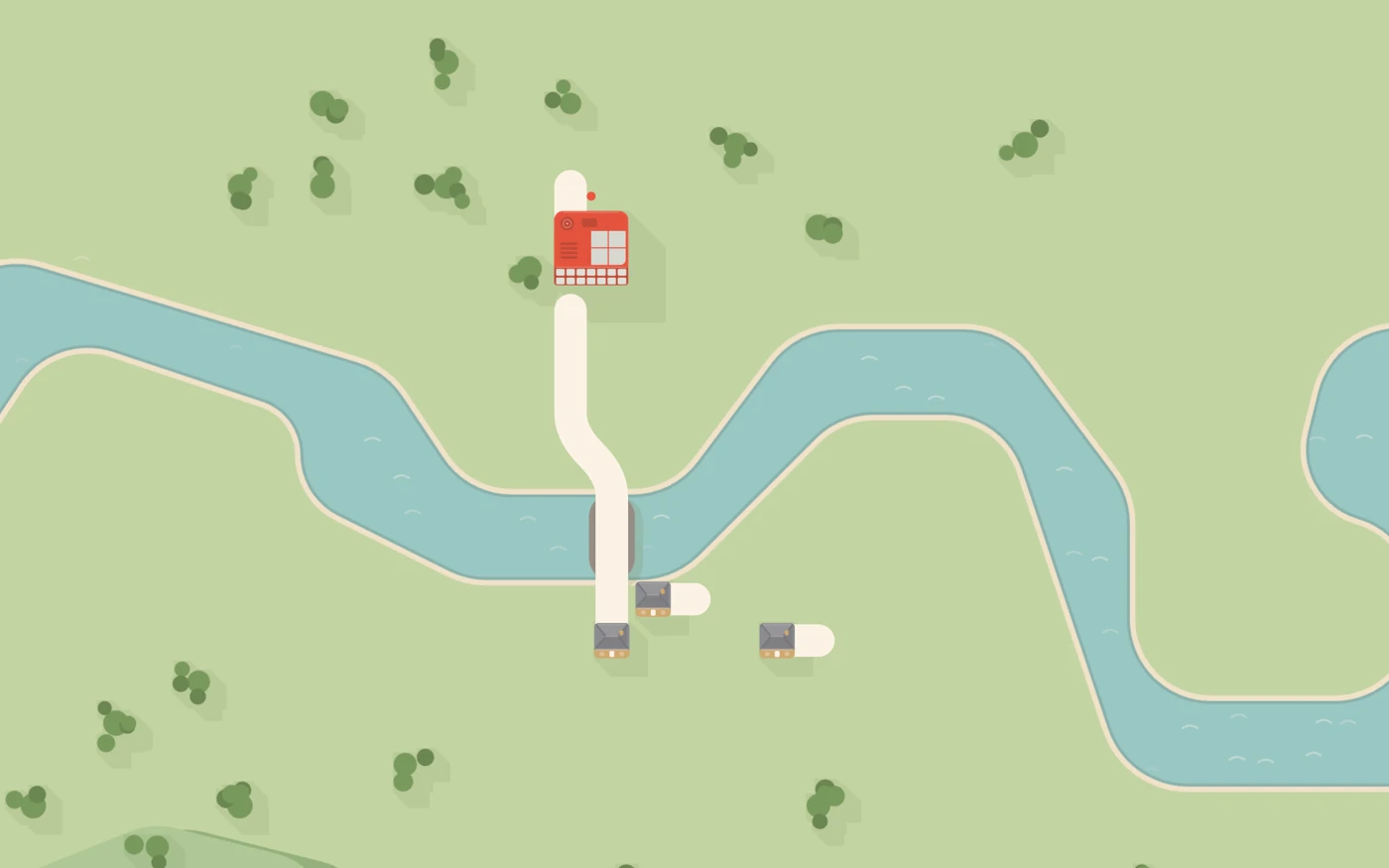
Your starting network. One car, one passenger. Cheap, flexible, and the first thing to clog.
Eight passengers a bus, running on roads you have already laid. Capacity without rebuilding anything.
Twelve a tram, and stops pull from further away. But track costs two road tiles a cell, and it still shares the road.
Twenty-five a train, the widest catchment, and the only one here that ignores the traffic. Three road tiles a cell to dig.
Buses arrive about four minutes in, trams around ten. The underground is day 12 — most first runs end well before that.
The city grows while you sleep. More houses, more workplaces, more people who need to reach them. You get one card to prepare.
Just tarmac. Reach the new arrivals, widen what is already clogging, keep everything connected.
A bridge permit, or a bus, tram or underground line. Ten tiles is what it costs you.
That is the whole economy. You start with 45 tiles and two bridge permits, and trams and underground lines are only offered every other night — so the card you pass on may not be there tomorrow.
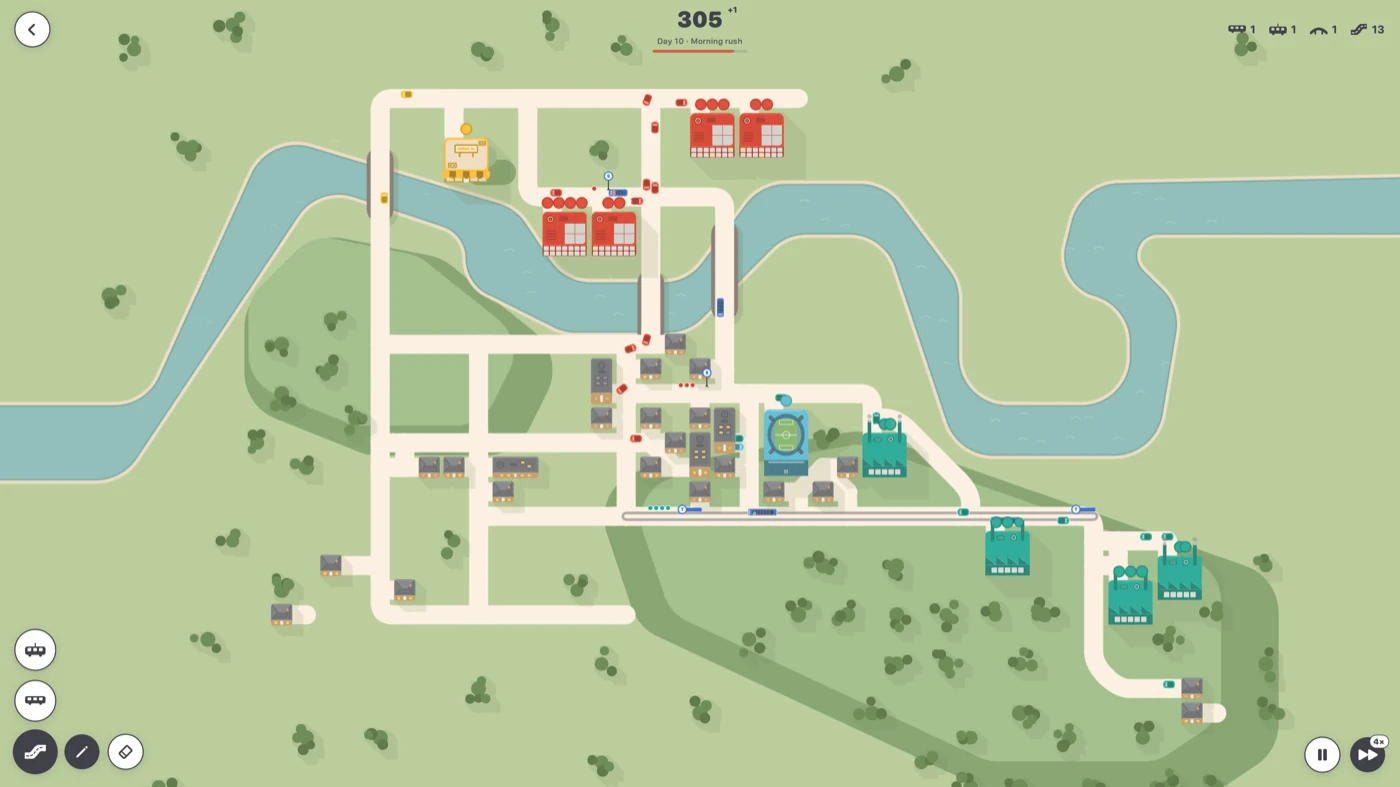
Every destination has a queue. Let eight people pile up and a countdown starts — forty-five seconds to get someone there. Let it run out and the run is over.
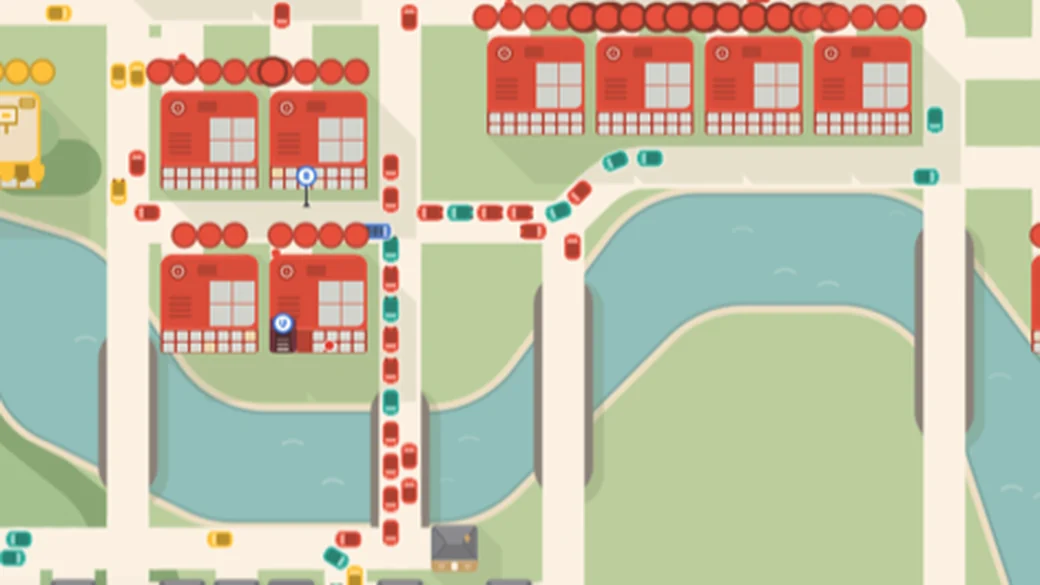
Nothing is reaching this corner of the city fast enough, and the morning rush doubles the rate people arrive.
A countdown ring closes around the building. You now have forty-five seconds and one decision.
Lay road, re-route a line, spend a token. It clears — and the next queue starts somewhere you were not looking.
There is something deeply satisfying about drawing one line and watching the queue disappear.
Build the route. Watch the network respond. Then find out where the pressure went.
Each with its own map, geography and mix of transport. London is the one you can play today — the other five are built and being tuned.
Free, in your browser, no download. An early build, currently featuring London.
Desktop browsers only — Chrome, Firefox, Safari and Edge are all fine.
No analytics. No tracking. If you find something weird, tell me on itch.io — that is currently how I hear about what happens in the game.
Multi Modal is an independent game about one of those things I have become unnecessarily interested in: how cities move. More weirdly specific apps →


